Introduction
The bed is the visual anchor of a bedroom. No matter how thoughtfully designed the rest of the space may be, if the bed feels unfinished or chaotic, the entire room can fall flat. A well-styled bed doesn’t have to feel fussy or overdone—it should feel inviting, intentional, and reflective of how you actually live.
Many people assume that making a bed look beautiful means piling on endless pillows. In reality, the most timeless and comfortable beds are created by starting with the right foundation and layering with restraint. It’s less about quantity and more about cohesion, texture, and balance.
If you’re unsure where to begin, start here: your comforter. This single choice sets the tone for everything else. Once that decision is made thoughtfully, the rest of the bed tends to fall into place with ease.
.jpg)
Start With the Comforter (This Is Where to Invest)
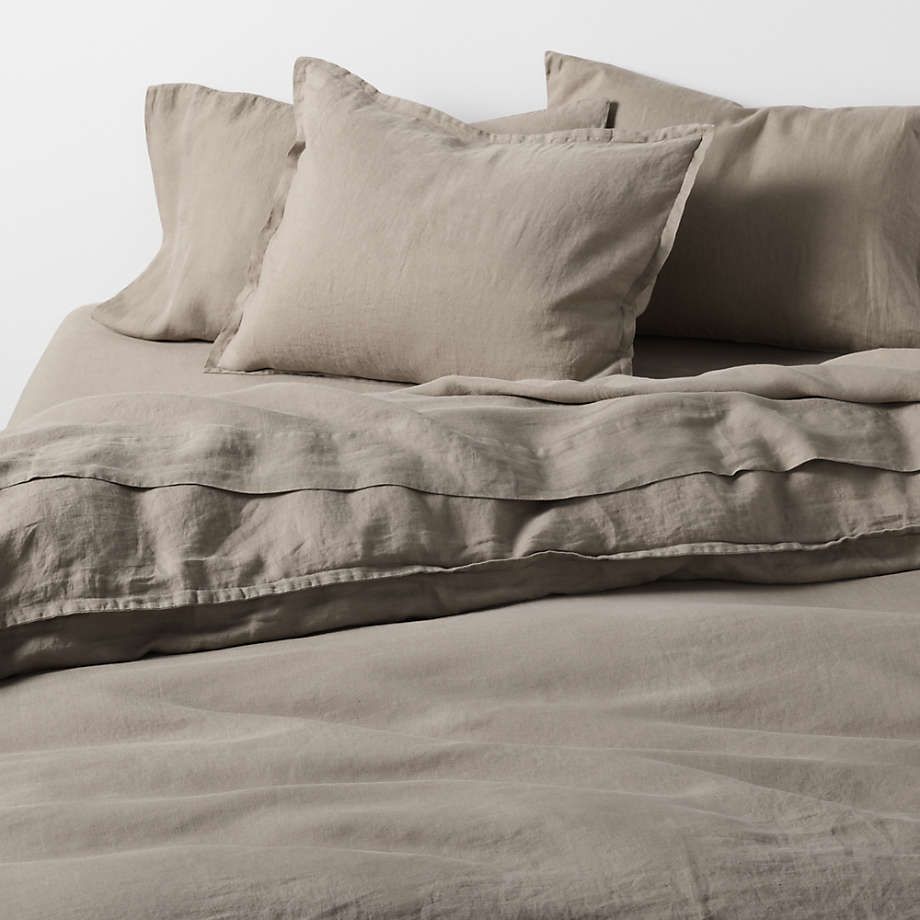
Your comforter or duvet is the star of the show—and the place where I recommend spending the most time and money. Everything else on the bed will revolve around this piece, so it’s worth being intentional.
Look for materials like linen or high-quality cotton with a subtle texture. Texture adds visual interest without relying on bold patterns, which helps the bed feel layered and elevated rather than busy. When choosing a color, aim for something that complements the room instead of overpowering it. Soft neutrals, muted earth tones, or gentle hues that echo existing elements in the space (artwork, wall color, wood tones) tend to age beautifully.
The goal is for the comforter to feel grounding—present, but not demanding all of the attention.
Layer in a Textured Neutral Blanket
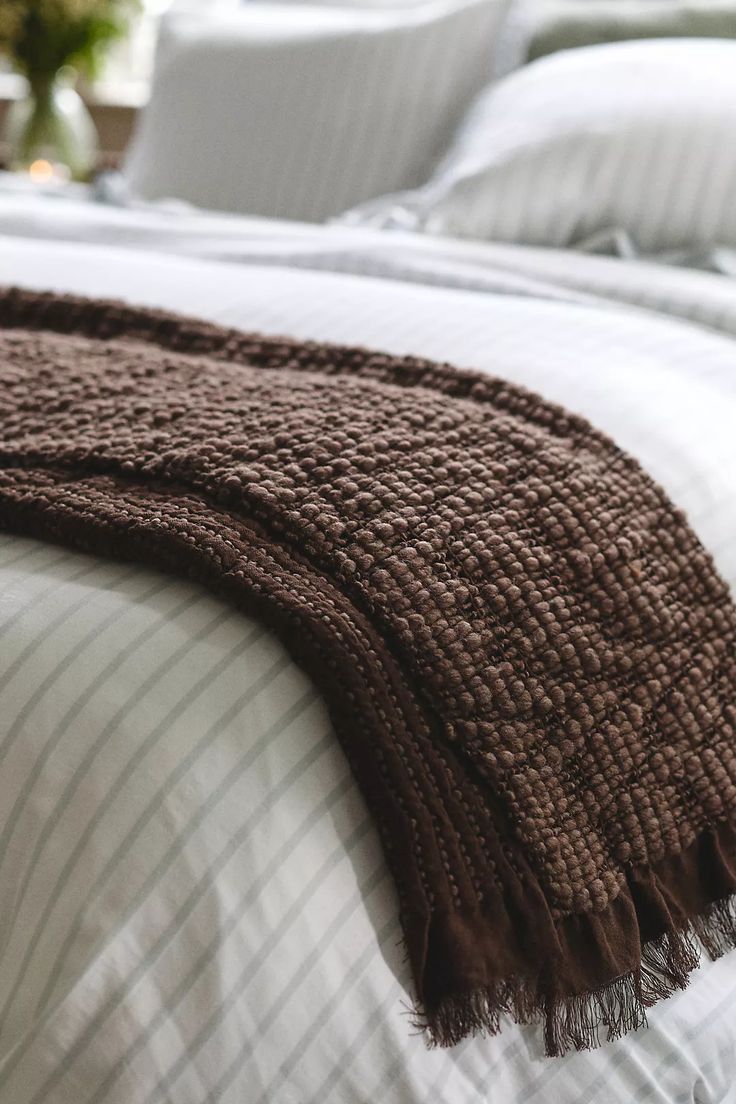
Once your comforter is set, add a textured, neutral-toned blanket. This could be a linen throw, a lightweight knit, or a soft woven coverlet folded neatly at the foot of the bed.
This layer serves two purposes: it adds depth and dimension, and it introduces contrast without introducing chaos. Keep the color palette calm and complementary. Think creamy whites, warm taupes, soft grays, or gentle beiges that enhance what’s already there.
Pillows: Balance Beauty and Function
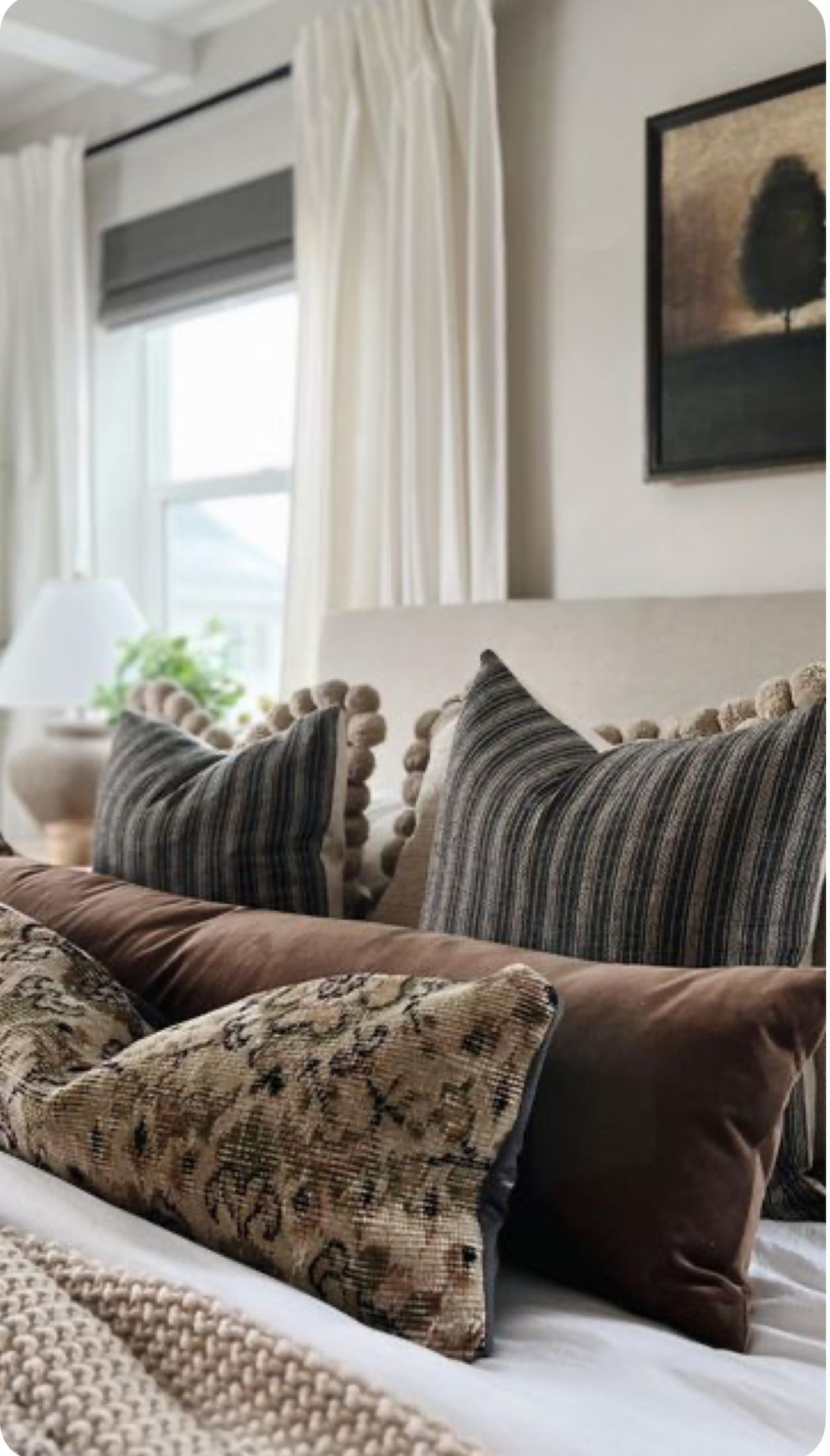
A beautiful bed should still be a functional one. Start with high-quality sleeping pillows—these are non-negotiable for comfort. From there, add a small number of throw pillows to enhance the look.
My rule of thumb is to let color and pattern enhance the room, not overpower it. Choose shades that either pull from the comforter itself or echo other elements in the space, such as wall color or artwork. I prefer complementary or closely related tones rather than high-contrast combinations, which can feel visually loud in a space meant for rest.
You don’t need many pillows—just enough to make the bed feel intentional and complete.
Conclusion
At the end of the day, a beautiful bed isn’t about perfection or excess. It’s about choosing a strong foundation, layering with care, and allowing the room to breathe. When your comforter, textures, and colors work together, the bed becomes a calm, inviting focal point rather than something you’re constantly adjusting.
Take your time with the initial choices, trust a restrained palette, and let texture do the heavy lifting. The result will be a bed that feels both elevated and livable—one you’re happy to come home to every single night.