A range hood is one of those kitchen elements that can easily become either an afterthought—or one of the most beautiful features in the room.
When you walk into a kitchen, the range hood naturally draws your eye. It can serve as a statement piece, almost like a sculpture, with hammered copper, aged bronze, plaster, or intricate crown molding. Or, it can quietly blend into the cabinetry and architecture, allowing the rest of the kitchen to take center stage.
But a range hood isn't just about looks. It is a hardworking appliance responsible for removing smoke, grease, odors, heat, and airborne particles from your kitchen. Choosing the right hood means finding the balance between form, function, scale, and ventilation power.
Let's break down the different styles of range hoods, how to determine the CFM you actually need, and how to make your hood a beautiful part of your kitchen design.
Choosing the Right Range Hood for Your Kitchen
The first step is determining what type of range hood works best with your kitchen layout and cooking surface. The placement of your range or cooktop will largely determine the format of hood you need.
Island Range Hoods
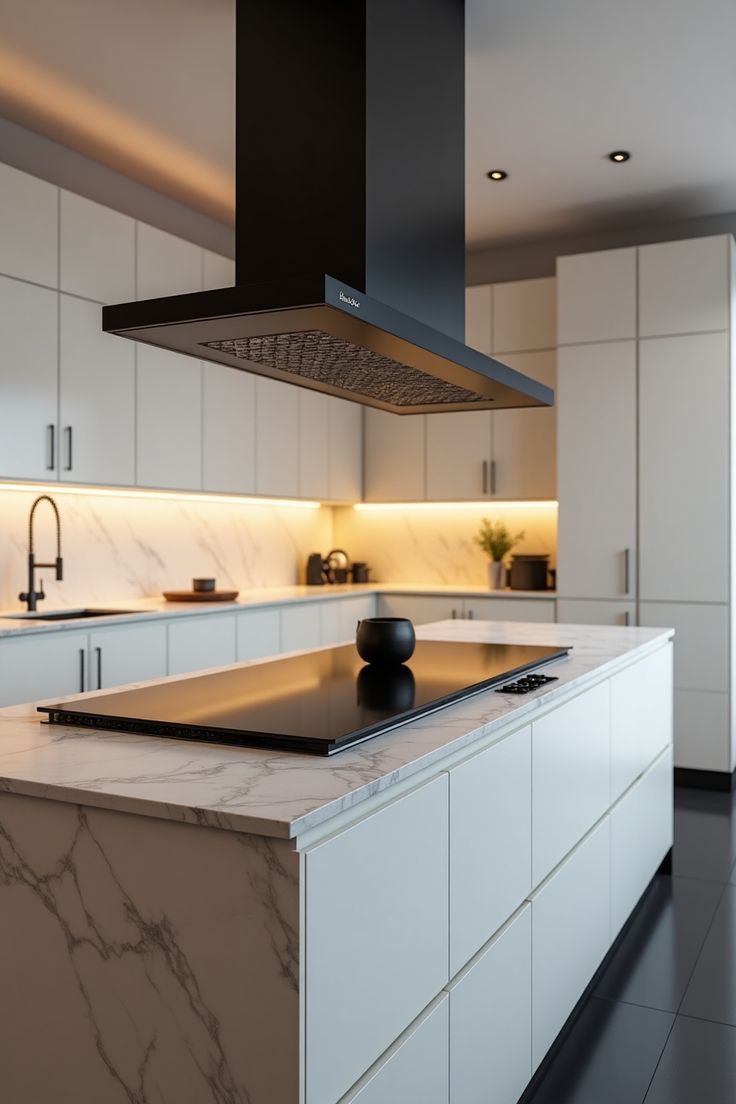
If your range is located on a kitchen island, an island hood is typically the best choice. Because the hood is exposed from all sides, it has a strong visual presence and can become a major design feature.
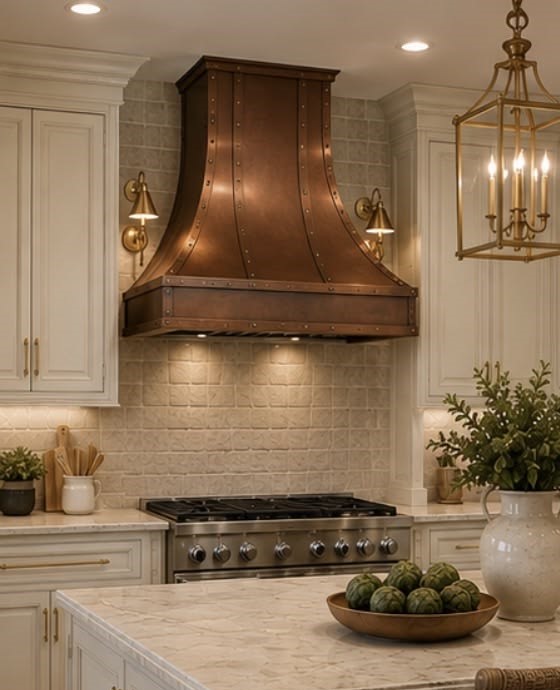
This is a great opportunity to be bold. A custom metal hood in hammered copper or antique bronze can add warmth and character to an otherwise simple kitchen. For a more architectural look, a plaster or drywall hood can be shaped with curves, beams, trim, or other architectural details.
Island hoods can also be some of the more expensive options because they often require additional finishing, larger canopy dimensions, and more involved installation. Custom metalwork can increase the cost considerably, while a simpler insert-and-hood-cover combination can provide the same general look at a lower price point.
Wall-Mounted Range Hoods
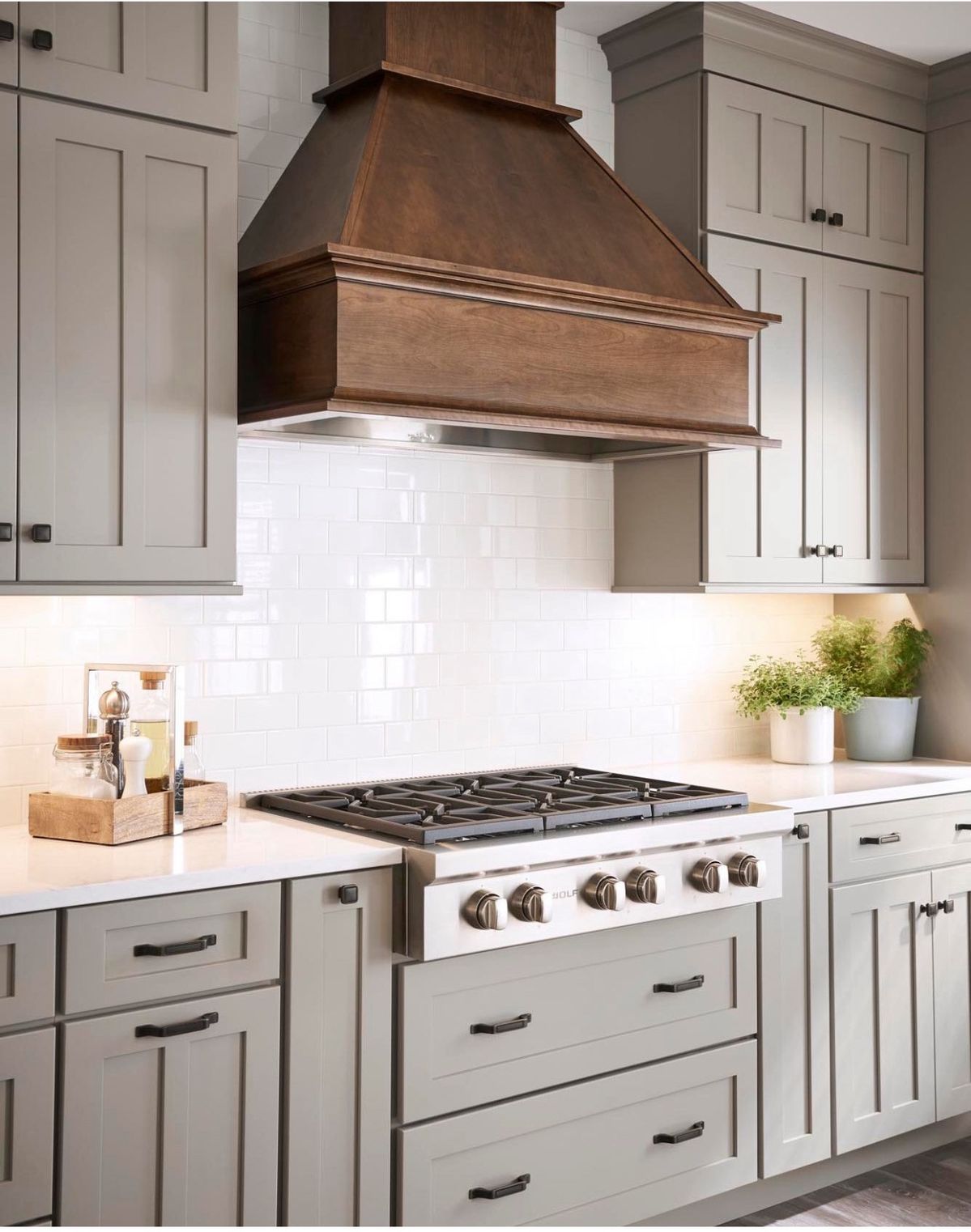
A wall-mounted hood sits against the wall above your range and is often the most versatile option for a kitchen.
These can range from simple stainless-steel chimney hoods to fully integrated custom hoods surrounded by cabinetry or finished with plaster, drywall, wood, or metal.
Because the wall provides a natural backdrop, wall-mounted hoods are especially well suited to kitchens where you want the range wall to act as a focal point. They also tend to offer a wider range of price points than fully custom island hoods.
Under-Cabinet & Integrated Hoods
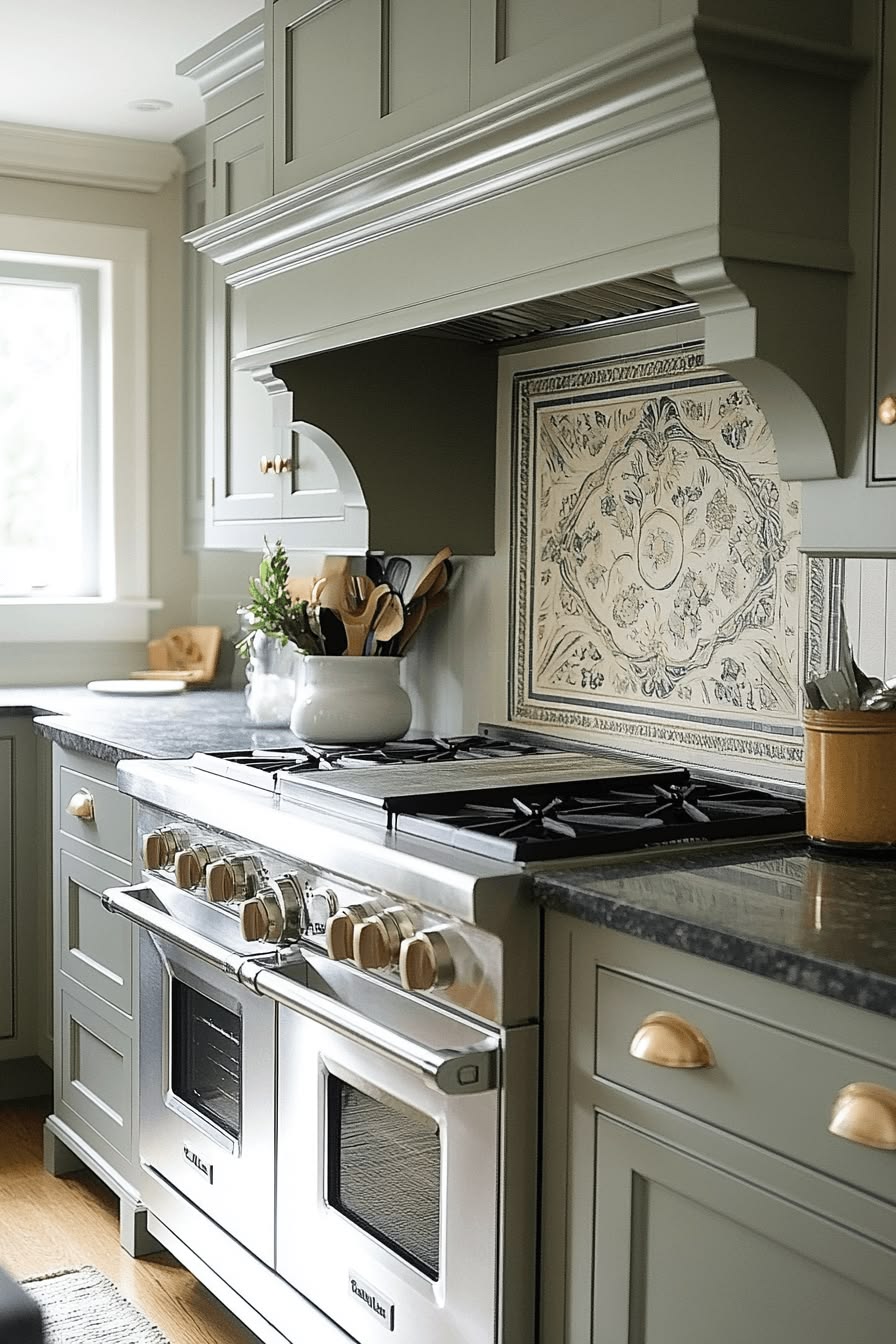
For kitchens where you want the ventilation to be almost invisible, an under-cabinet or integrated hood can be the perfect solution.
These hoods are tucked beneath cabinetry or installed as an insert inside a custom hood surround. The result is a cleaner, more understated appearance where the architecture—not the appliance—is what you notice.
This approach can also be an excellent choice when you're working with a smaller kitchen, a more traditional cabinet layout, or a project where you want to prioritize cabinetry and storage.
From a budget standpoint, these can often be some of the more approachable options, although the final price depends heavily on the insert itself and the custom cabinetry or hood surround surrounding it.
The important thing to remember: the most expensive-looking hood isn't necessarily the most expensive hood. A simple ventilation insert can become a high-end design feature when it is paired with beautiful cabinetry, thoughtful proportions, and the right materials.
How Much CFM Do You Actually Need?
Now for the less glamorous—but extremely important—part: CFM.
CFM stands for cubic feet per minute and measures how much air the range hood can move. More CFM does not automatically mean better ventilation.
In fact, choosing a hood that is significantly more powerful than your kitchen requires can create its own problems.
Your range hood is exhausting air from your home. If you're removing hundreds of cubic feet of air every minute, that air has to be replaced somehow. Otherwise, the house can develop negative pressure.
One of our recent projects brought this issue to the forefront when a client pointed out that a particularly powerful hood motor could have a significant impact on their home's HVAC system. Their concern was that the hood could effectively pull a substantial amount of conditioned air out of the home while operating, increasing heating and cooling costs and potentially creating enough negative pressure to require a dedicated makeup-air system.
And this is exactly why bigger isn't always better.
So, How Do You Determine the Right CFM?
There are several factors to consider:
- The type of cooking surface — gas ranges generally require more ventilation than electric or induction.
- The BTU output of the range — a high-output professional range typically needs more ventilation.
- The size and placement of the hood — island hoods may require more capture power because they are exposed on all sides.
- How frequently you cook — someone who regularly sears steaks and cooks at high heat will have different needs than someone who primarily uses a cooktop for light meals.
- The length and configuration of the ductwork — long or complicated duct runs can affect ventilation performance.
- Your home's HVAC and makeup-air system — particularly important when selecting a high-CFM hood.
As a general starting point, many kitchen ventilation guidelines use approximately 100 CFM per 10,000 BTUs for gas cooking equipment, while other recommendations use different calculations depending on whether the hood is wall-mounted or over an island. Manufacturer requirements and local building codes should always be considered before making the final selection.
And there is another important number to know: 400 CFM.
In many jurisdictions, range hoods capable of exhausting more than 400 CFM can trigger makeup-air requirements under residential building codes. The exact requirements vary by location and installation, so this is something to discuss with your contractor and HVAC professional early in the design process.
The goal isn't to buy the most powerful motor available. The goal is to select a hood that provides enough ventilation for your cooking habits and range without unnecessarily exhausting conditioned air from your home.
Sometimes, downsizing the motor can mean saving money not only on the hood itself, but also on additional makeup-air equipment and ongoing energy costs.
That is a beautiful example of where good design is about more than aesthetics. The best kitchen is one where every component works together.

Make Your Range Hood a Design Statement
Once you've determined the appropriate ventilation requirements, the fun part begins: choosing how your hood looks.
A range hood can introduce an entirely new material into a kitchen or reinforce finishes that are already present.
Hammered Copper
Hammered copper brings warmth, texture, and an old-world quality to a kitchen. It works beautifully with warm white, cream, taupe, and natural wood cabinetry.
Pair it with aged brass or antique bronze hardware for a collected, traditional feel, or use darker hardware for a more grounded and dramatic look.
Antique Bronze
Antique bronze is one of our favorite options for creating a sophisticated, timeless kitchen. Its darker, aged finish adds depth without feeling as stark as black.
It pairs beautifully with warm white cabinetry, natural oak, mushroom tones, and earthy greens. Matching the hood to bronze cabinet hardware can create a cohesive look, but don't be afraid to mix metals. A bronze hood with aged brass hardware can feel much more layered and intentional than an overly matched kitchen.
Matte Black
Matte black is a great choice for a kitchen with modern architecture or strong contrast.
It looks particularly beautiful against white, cream, light oak, or muted green cabinetry, and it can be repeated through cabinet hardware, plumbing fixtures, lighting, or other architectural details.
The key with black is balance. Rather than making every finish black, use it strategically to create visual punctuation throughout the kitchen.
Stainless Steel
And, of course, stainless steel remains a classic for a reason. It is durable, versatile, and especially appropriate for kitchens with a contemporary or professional feel.
If stainless steel feels too commercial for your space, consider surrounding it with warmer elements—natural wood, stone, brass hardware, or painted cabinetry—to soften the overall look.
Don't Be Afraid to Mix Your Metals
One of the biggest misconceptions in kitchen design is that every metal needs to match.
It doesn't.
A kitchen can feel much more collected when you allow different finishes to work together. A hammered copper hood with aged brass hardware, for example, can feel warm and intentional. A matte black hood with brushed nickel appliances can create contrast without looking disconnected.
Instead of asking, "Do all of these finishes match?" ask:
"Do these finishes belong together?"
Consider the undertones, the overall style of the kitchen, and where each finish appears. Repeating a finish two or three times throughout the room can help create cohesion without making the space feel overly coordinated.
Function First, Beauty Always
A range hood is a perfect example of why interior design is about more than simply choosing beautiful things.
The right hood needs to be appropriately sized for the cooking surface, powerful enough to effectively ventilate the kitchen, compatible with the home's HVAC system, and properly installed. Once those functional requirements are established, you can turn your attention to the part everyone sees.
Whether that means a dramatic hammered copper centerpiece, an architectural plaster hood, a sophisticated antique bronze finish, or a nearly invisible integrated insert, there is no shortage of ways to make ventilation beautiful.
The best range hood is one that does its job exceptionally well—and looks like it was always meant to be there.